Why Do Ketamine With a Therapist Instead of a Friend? Safety, Support, and the Work That Happens After Ketamine
Why do KAP with a therapist instead of a friend? Learn how preparation, professional support, boundaries, and integration make ketamine-assisted psychotherapy different.
Your Friend Can Support You. But They Can't Be Your KAP Therapist. Here's Why
When we struggle emotionally, turning to a trusted friend or family member feels like the most natural thing to do. These people know us, some of them for most of our lives. They mean us well. We trust them. They are ready to listen, offer comfort, sit with our pain.
And it's priceless to have this kind of support in your life.
But don't get me wrong, no matter how well-meaning and supportive, our friends are not qualified (unless they are a therapist) to provide ketamine-assisted psychotherapy, assess what is happening clinically, or help you work with difficult material that comes up after a ketamine session.
Ketamine Therapy: Why Can't My Best Friend Just Stay with Me?
During a recent consult call, a potential client asked, "I'm not sure I understand this; if ketamine helps me turn inward anyway, why do I need a therapist there? Couldn't my best friend just sit with me?"
I understand why someone might feel this way. It sounds reasonable. This person knows you well. They care about you deeply. You trust them.
But...
Having someone beside you while you take ketamine is not the same thing as ketamine-assisted psychotherapy[ND1] .
Your Friend Knows You. Your Therapist Knows How to Hold the Process
Your best friend may have known you for years. When you share that much history with someone, it means a lot, and they can be an incredible source of emotional support. They may comfort you. They may desperately want you to feel better. They may plan a trip, take you out to dinner or the movies, or do whatever they can to cheer you up.
As your therapist, I have a different job.
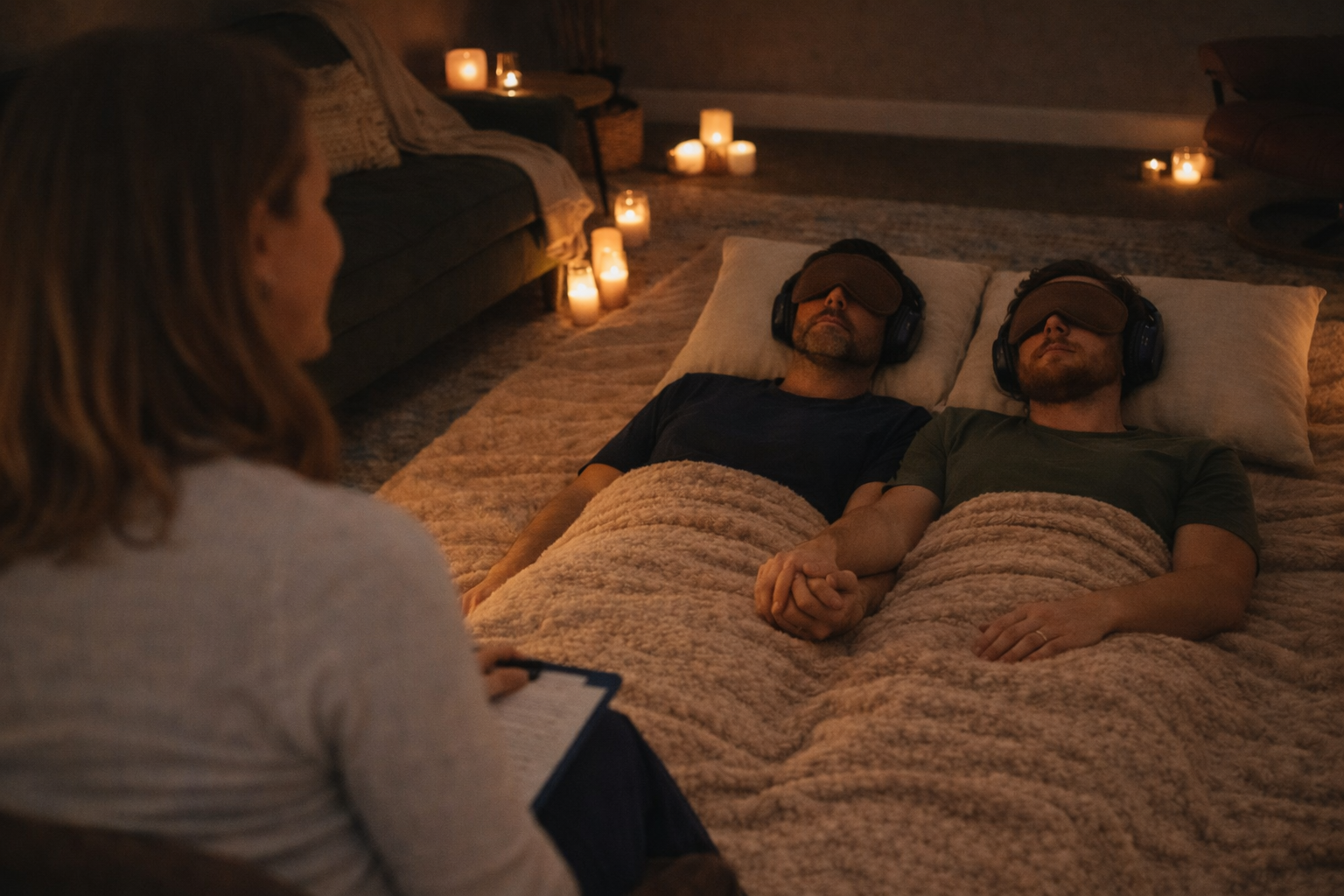
I won't rush to rescue you from every difficult feeling. I'm not here to make the sadness or anger disappear. Sometimes, I may actually ask you to stay with it long enough to understand where it's coming from and what it may be trying to tell us. I'm also paying attention to your patterns, defenses, attachment history, trauma responses, and the negative cycle between you and your partner. During your ketamine experience, I remain present and help you feel safe and grounded.
I help you stay curious. During our ketamine therapy North Carolina, I will ask you many questions:
What are you noticing?
Where do you feel that?
What does this part of you need?
Then, I work with you afterward to make sense of what came up and integrate it into your life and relationship.
This is what makes KAP psychotherapy rather than simply an experience with ketamine.
You may also find helpful: Is Ketamine Therapy a Good Fit for Your Marriage? What Couples Should Know
With Couples, There Are Two Nervous Systems in the Room
No matter how supportive or well-meaning our friends are, it's hard for them to stay completely neutral when relationship problems are involved.
Whether it's your best friend, your partner's friend, or someone you both know well, it puts them in a difficult position. They may feel pulled to take sides, defend one of you, or try to mediate something they were never meant to carry.
They're your friends. Their job is to care about you, not to become your couples therapist.
When we do ketamine therapy for couples, I'm not only watching one person's experience. I don't take sides. There are two nervous systems in the room, and each one has its own history, triggers, fears, and ways of protecting itself. I understand your cycle. I'm not there to decide who is right. I'm paying attention to the dance between you.
So when vulnerability comes up during or after the ketamine experience, I can help you slow things down and bring those new insights back into your EFT work. Instead of slipping straight into the old cycle, we can ask: What is happening underneath this reaction? What are you actually afraid of? What do you need your partner to understand right now?
That's not the kind of experience you can have with a friend.
You might also find helpful: Ketamine-Assisted Psychotherapy for Couples: 6 Common Myths About KAP That Keep People Confused
What is Ketamine-Assisted Therapy & Why Ketamine Is Not Something to Experiment with on Your Own
Ketamine is a dissociative anesthetic, which means that it can have some hallucinogenic effects. Every person can have a different experience with ketamine. You may feel deeply relaxed. You may feel dizzy. Confused. Anxious. Alert. Ketamine may affect your perception and coordination.
That is why the therapeutic setting is extremely important.
Taking ketamine on your own, without proper medical screening or professional support, means there may be nobody there to notice when something isn't going as expected or to know what to do next.
In KAP, we don't just hand you medication and hope for the best. There is medical screening first, clear preparation, a controlled environment, and professional support throughout the process. You get to turn inward because the people responsible for your care are staying grounded and paying attention to your safety.
That structure matters.
You might also find helpful: Myths About Marriage Counseling Intensives
Ketamine Isn't What Makes It Psychotherapy
Here's what I want you to know: the medicine alone isn't what makes KAP therapy.
Ketamine may help soften resistance, quiet some of the mental noise, and give you enough distance from your usual narratives to access feelings you normally defend against. It can create a different perspective.
But ketamine-assisted therapy is so much more than taking a medicine. And going through an intense emotional experience without professional support can sometimes feel overwhelming.
That's where the therapeutic relationship matters. In marriage counseling Wake Forest, we create the safety and structure to stay with what comes up instead of immediately running from it. And then we do the work of taking whatever you discovered during your ketamine experience and bringing it back into your real life and your relationship.
You might also find helpful: Why EFT Focused Marriage Retreat in North Carolina?
Your friend still has an important role.
They can hold your hand. Love you through it. Support you afterward. They can drive you home (this is actually required as part of the process), spend the evening with you, listen if you want to talk, and help protect that quiet space after the session.
But a support person and a therapist have two very different roles.
Your friend can support you through the experience. Psychotherapy requires a different kind of holding.
And it’s totally okay if you need both.
Quality Marriage Counseling and Ketamine Assisted Psychotherapy in Wake Forest NC
At Marriage Counseling Wake Forest NC, I offer the best marriage counseling I can, using the most empirically validated modality, Emotionally Focused Couples Therapy (EFCT), and, when appropriate, Ketamine-Assisted Psychotherapy, to expedite results.
This is not your typical weekly kind of therapy. I am here to help couples and individuals in relationships do what has been proven to help them heal their relationships. Through marriage counseling Wake Forest NC, marriage retreat in North Carolina, individual counseling, and Ketamine-Assisted Psychotherapy, there is something for every couple who wants to heal their relationship.

Hi, I'm Irina Baechle, LCSW, in Raleigh, NC. I believe in the power of healthy relationships and write about them.
Whether you and a partner are co-creating a healthy marriage or you are single, navigating healthy relationships, my content is for you.
Let's make healthy, trustworthy marriages the norm, not the exception!
Topics I write about include marriage, infidelity, roommate marriages, sexless marriage, ketamine assisted psychotherapy, healthy second marriages, and healing after toxic or unfaithful marriages.
Have questions about marriage counseling? Visit the FAQ to find out more.