
Ketamine Therapy North Carolina
When You’re Ready to Break Through What Talk Therapy Alone Can’t Reach
Are You Ready For Healing That Rewires Patterns, Not Just Explains Them?
You already understand your patterns. You know why you shut down in hard moments. You know why you become anxious, angry, overwhelmed, or numb. You can trace it back to your childhood, past relationships, or painful experiences. And yet… when the moment hits, your body takes over.
You still feel hijacked by emotion. You still react in ways you later regret. You still find yourself stuck in the same loops , no matter how much insight you have.

Can you relate to what this feels like in your body, maybe even right now as you read this?
A tight, gripping sensation in your chest or a knot in your stomach that won’t fully relax
Sudden waves of anxiety that rush through you- your heart racing, breath getting shallow
Bursts of anger that flare up fast, before you can stop them
A heavy, dull numbness, like you’re moving through life on autopilot
Deep exhaustion in your body and bones from always holding it together
A sinking feeling of shame, knowing you want to change but feeling stuck
The truth is that even though cognitive insight can be satisfying and can help things make sense, it’s not nearly enough, understanding alone rarely creates real change. What you really need is a new corrective emotional experience where fear softens, safety grows, and your nervous system learns that you don’t have to stay in survival anymore. As Einstein said: “All knowledge is experience. Everything else is just information.”
You Are Ready To Breath Again

Just Imagine This:
• Emotions no longer crash over you like waves you can’t control
• Your reactions slow down — giving you space to choose instead of explode, shut down, or spiral
• Calm becomes something you can actually feel in your body, not just wish for
• Hope quietly returns, where exhaustion and heaviness once lived
• The constant tension you carry begins to soften, replaced by a sense of flow and ease
You start to notice when old patterns show up, and instead of being pulled under by them, you’re able to move through them with awareness and strength.
Along the way, many people discover resilience, confidence, and inner resources they never knew they had. This isn’t just about managing symptoms or coping a little better. It’s about transforming how you experience yourself , so life feels lighter, safer, more connected, and fully lived.
Hi, I'm Irina, and I Can Help You Live a Full Life

I know what it's like to carry weight you can't quite name. To live with anxiety that won't quiet down. To navigate ADHD when your brain feels like it's firing in a thousand directions at once. To manage chronic pain that exhausts you, not just physically, but emotionally. To survive divorce and wonder if you'll ever feel whole again. I don't just talk the talk. I swear. I cry. I'm real.
I'm also a mom who knows what it feels like to be overwhelmed, to juggle too much, and feel like you're failing at all of it. I'm a human who's had to do and is still doing my own deep healing work. And I'm a therapist who's obsessed with actually getting results for my clients.
That's why I don't just show up and wing it. I invest in myself constantly though advanced trainings, monthly consultation with experts I pay because I refuse to plateau. I track my outcomes. I study the brain like it's my favorite mystery to solve. Because this isn't just a job for me. It's my love.
And here's the thing: I take on a very limited number of clients at a time. Because no one wants to be client #34 on my caseload. You're a person I genuinely care about. I see you. I'm fully invested in your healing.
I love Ketamine-Assisted Psychotherapy because I've seen what it can do when trauma, anxiety, or pain has literally rewired your nervous system. KAP creates a window where real healing can happen, not just talking about your pain, but actually processing it and letting it go.
You deserve more than survival. You deserve to feel alive again. And I'd be honored to help you get there.
Frequently Asked Questions
Everything you need to know about Ketamine therapy North Carolina is right here, from how it works to what to expect and how to get started.
And if your partner is ready to do this work alongside you, explore my couples retreat North Carolina and marriage counseling Wake Forest NC options too.
-
Ketamine is a Schedule III dissociative anesthetic that's been used safely in medical settings for over 50 years. It's not a new or experimental drug, it's been in operating rooms and emergency departments longer than most people realize.
What is newer is using it at lower doses for mental health for depression, anxiety, PTSD, and trauma. And unlike traditional psychiatric medications, ketamine doesn't numb you. It wakes your brain up, creates new neural connections, and opens a window for real emotional change.
Same drug. Very different purpose.
-
It's therapy that actually rewires patterns instead of just explaining them. And that distinction matters more than most people realize.
You've probably already done some version of therapy. You understand your patterns. You can trace the anxiety back to where it started. You know why you shut down or blow up or spiral. You have the insight. And yet when the moment hits, your body takes over anyway and you're right back in the same loop you've been in for years.
That's because insight alone doesn't create change. Understanding something in your thinking brain doesn't automatically update your nervous system. The fear, the shame, the old survival responses, those live in the body. In the deeper, subcortical brain that doesn't speak the language of logic and self awareness.
Ketamine Assisted Psychotherapy goes there. It creates a window where your brain is genuinely more open to forming new patterns and connections. Not just talking about your pain but actually processing it and letting it go. For people who've felt stuck despite doing all the right things, this is often what finally moves the needle.
-
It's for people who are exhausted from surviving and ready to actually live.
More specifically, it's for you if you know your patterns inside out and still can't stop them. If you've tried weekly therapy, read the books, done the work, and still feel like something fundamental hasn't shifted. If anxiety, depression, PTSD, chronic pain, ADHD, or the aftermath of divorce or trauma has literally rewired how your nervous system operates and you need something that works at that level, not just the surface.
It's also for people who are sick of traditional psychiatric medications and the numbness and side effects that come with them. People who want to feel like themselves again, not a medicated version of themselves that gets through the day but isn't really living it.
And honestly? It's for people who are done with the weekly therapy model of one hour, one brick at a time, one week at a time, indefinitely. You want to go deep, move fast, and come out the other side actually different. Not just coping a little better.
-
Weekly therapy is like trying to build something real in five minute increments. You show up, spend the first chunk catching your therapist up on your week, start to get somewhere, and then the hour ends. You go back to your life. Seven days pass. You come back and start over.
Real breakthroughs in that format are rare. Not because the therapist isn't skilled or you're not trying hard enough. Because you can't build momentum when you're constantly stopping and starting.
A six hour intensive works completely differently. We're not watching the clock. We're not rushing to wrap up because someone else is in the waiting room. We can stay with the hard uncomfortable stuff long enough to actually understand what's driving your patterns and shift them in real time, right there in the session.
The morning we get clear on what's actually going on underneath everything. Midday we go deep, and we don't stop when it gets uncomfortable because that's exactly when breakthroughs happen. The afternoon we integrate, make sense of what came up, and make sure you leave with something real, not just a head full of big emotions and nowhere to put them.
One intensive often delivers what would take months of weekly sessions. Not because I'm magic but because we're building momentum in real time instead of resetting every seven days.
-
Most people describe it as the medicine of perspective. Like suddenly being able to zoom out from the story you've been living inside for so long and see it differently. The grip of old narratives loosens. The fear response quiets. The walls that have been protecting you but also isolating you start to soften.
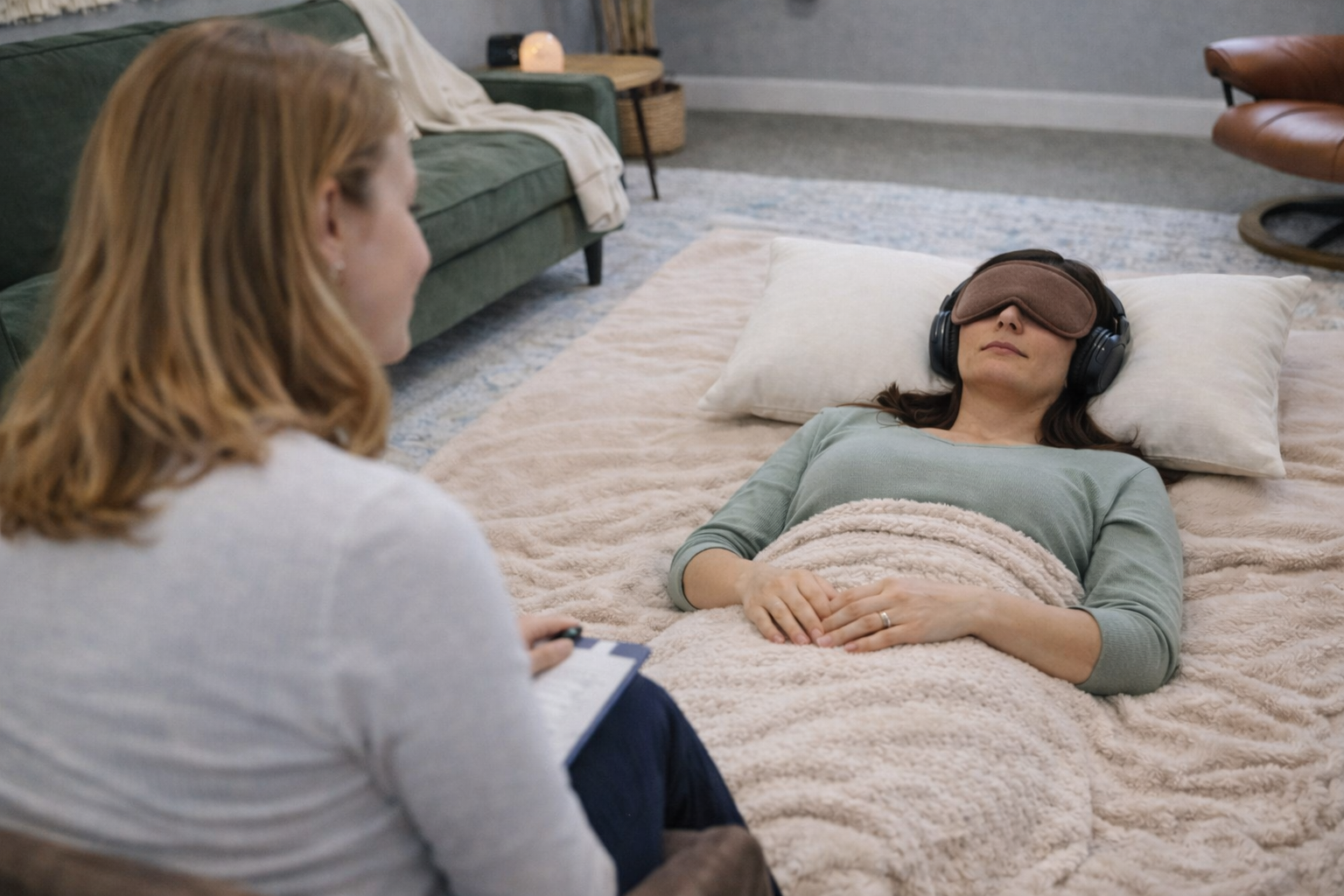
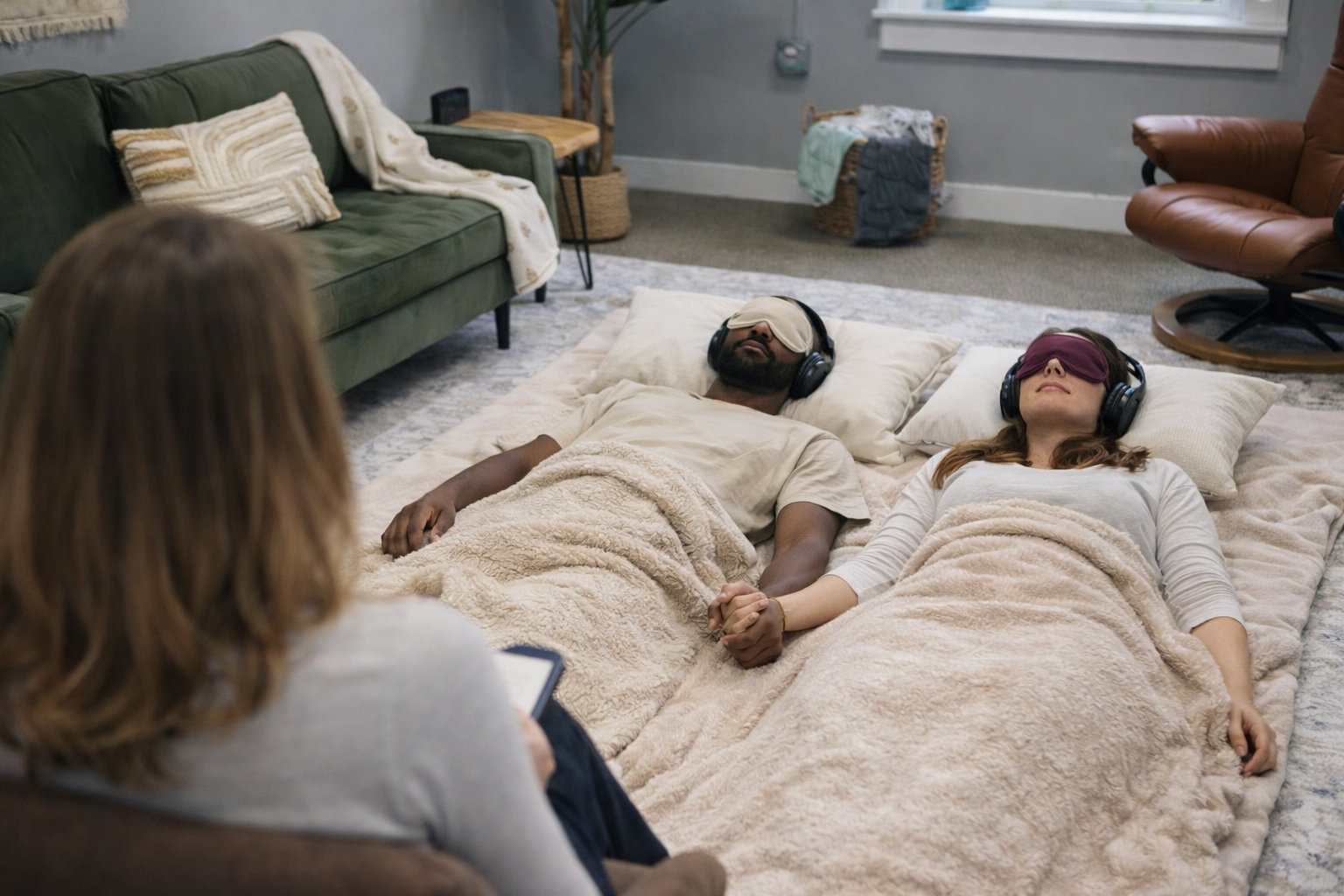
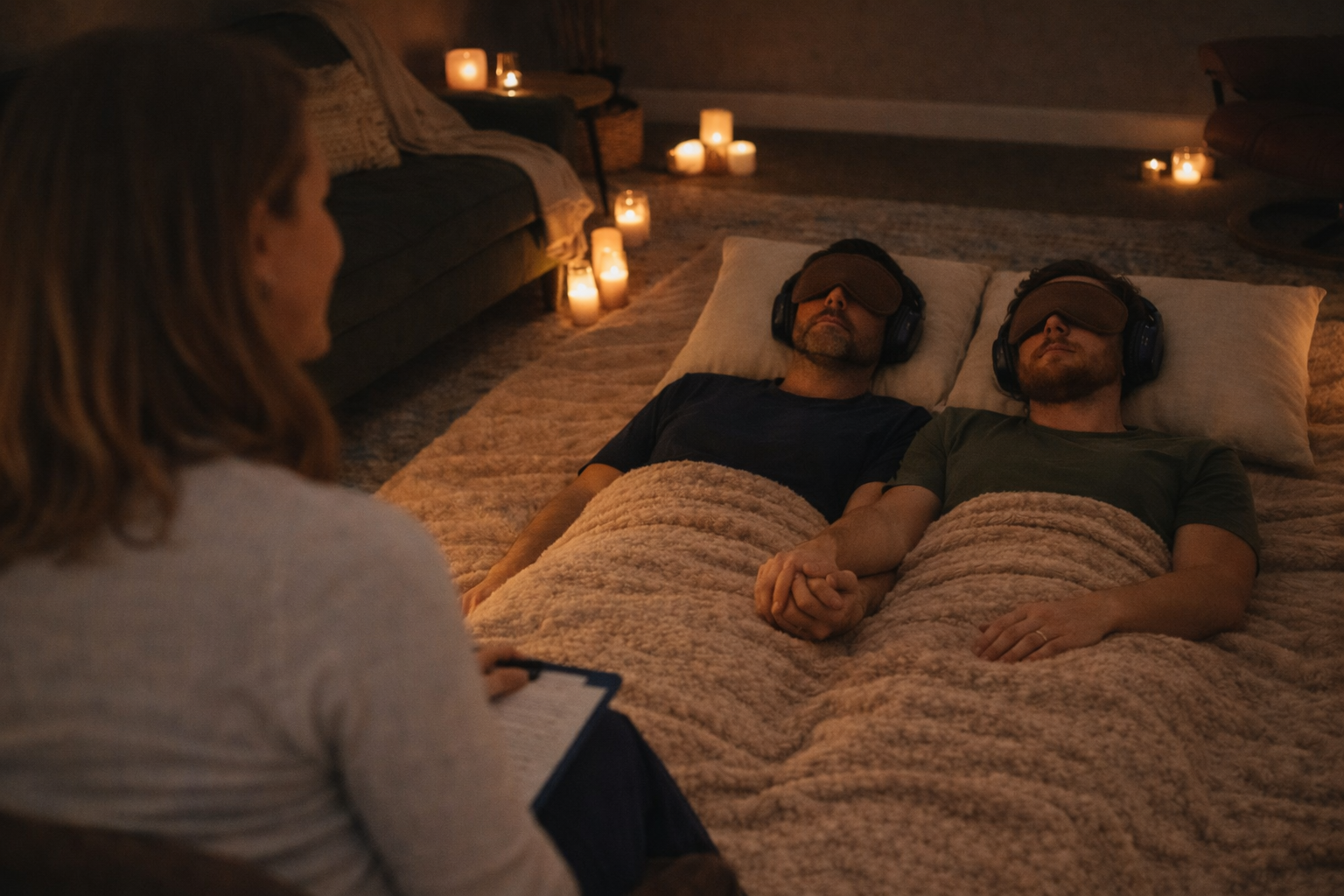
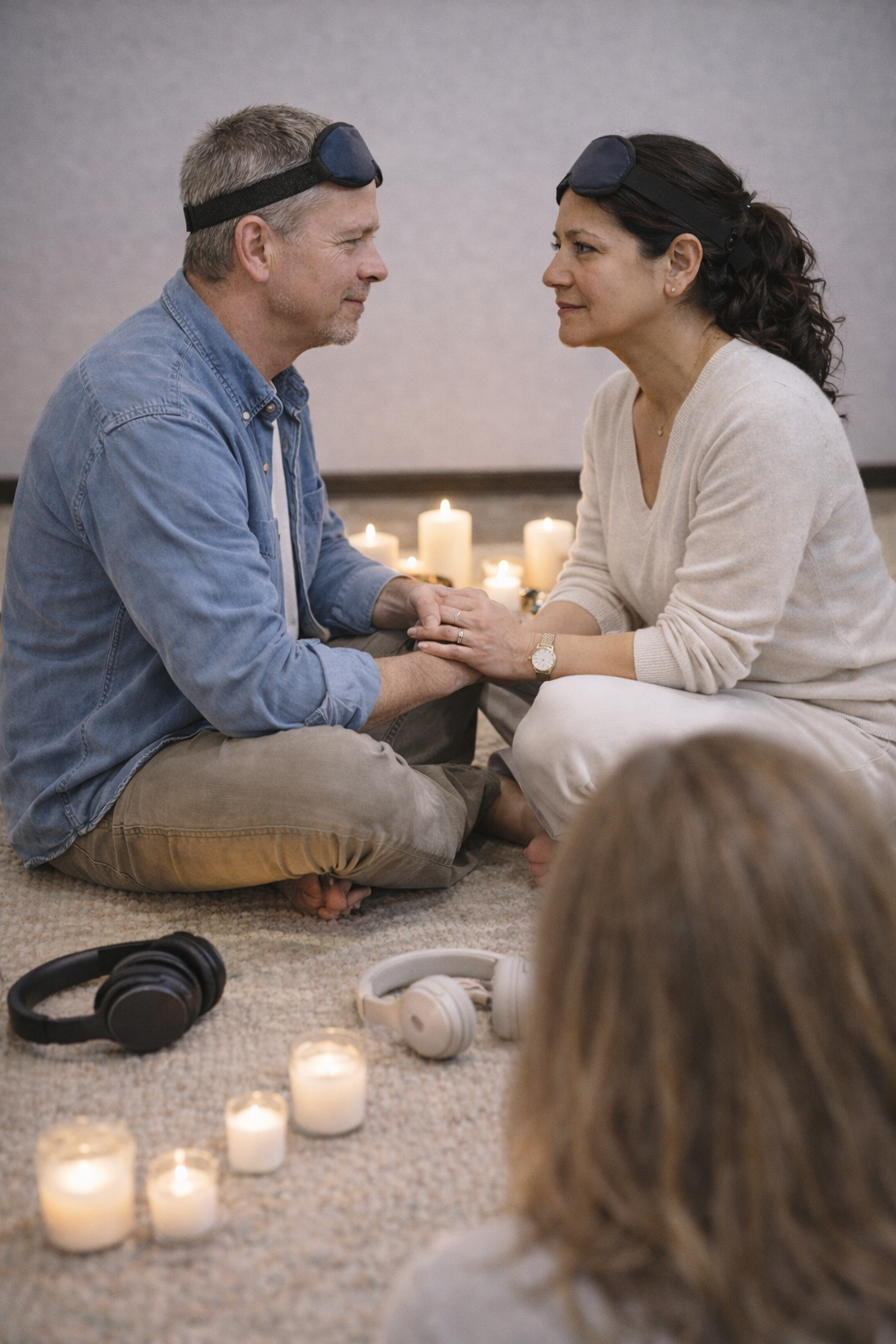
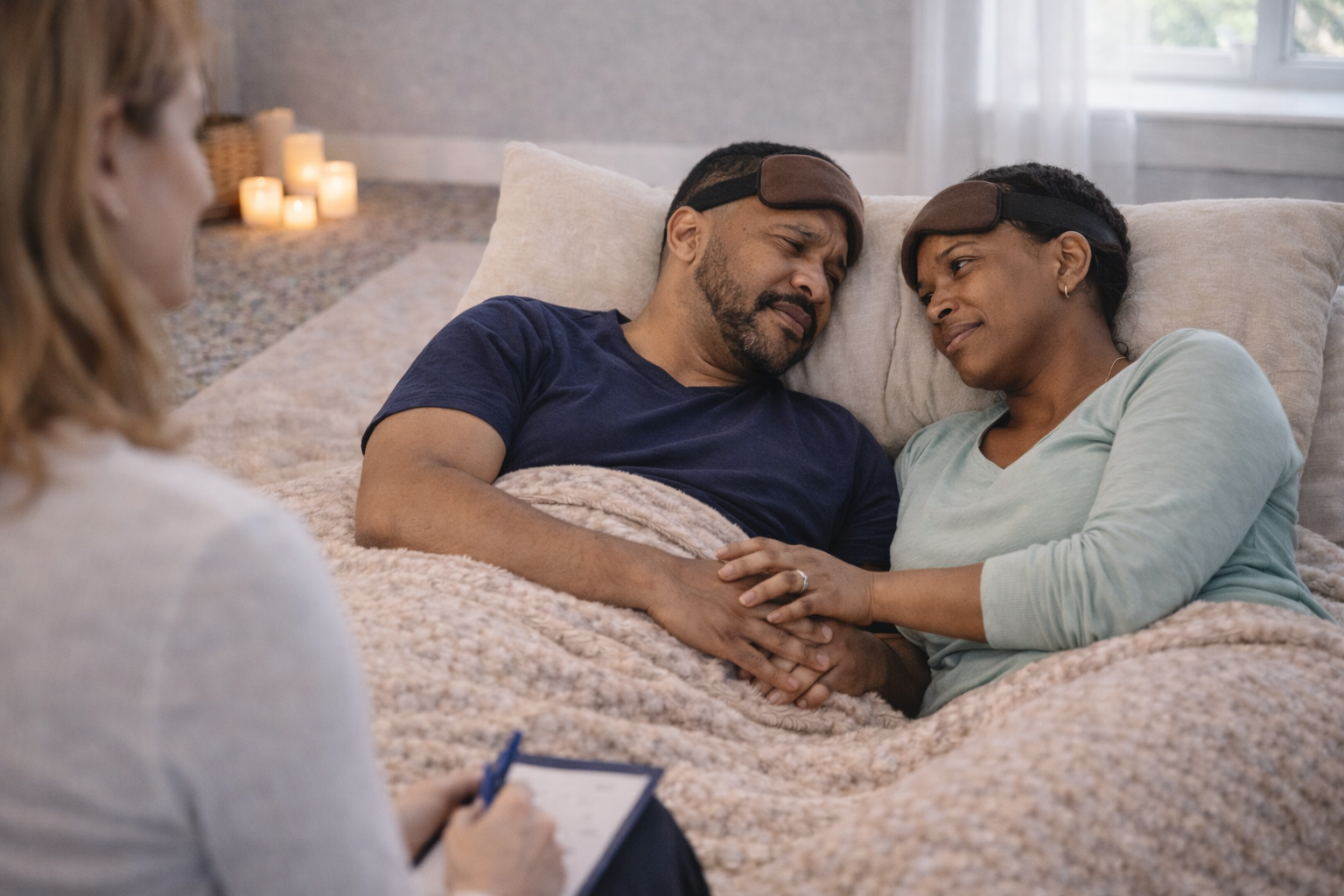
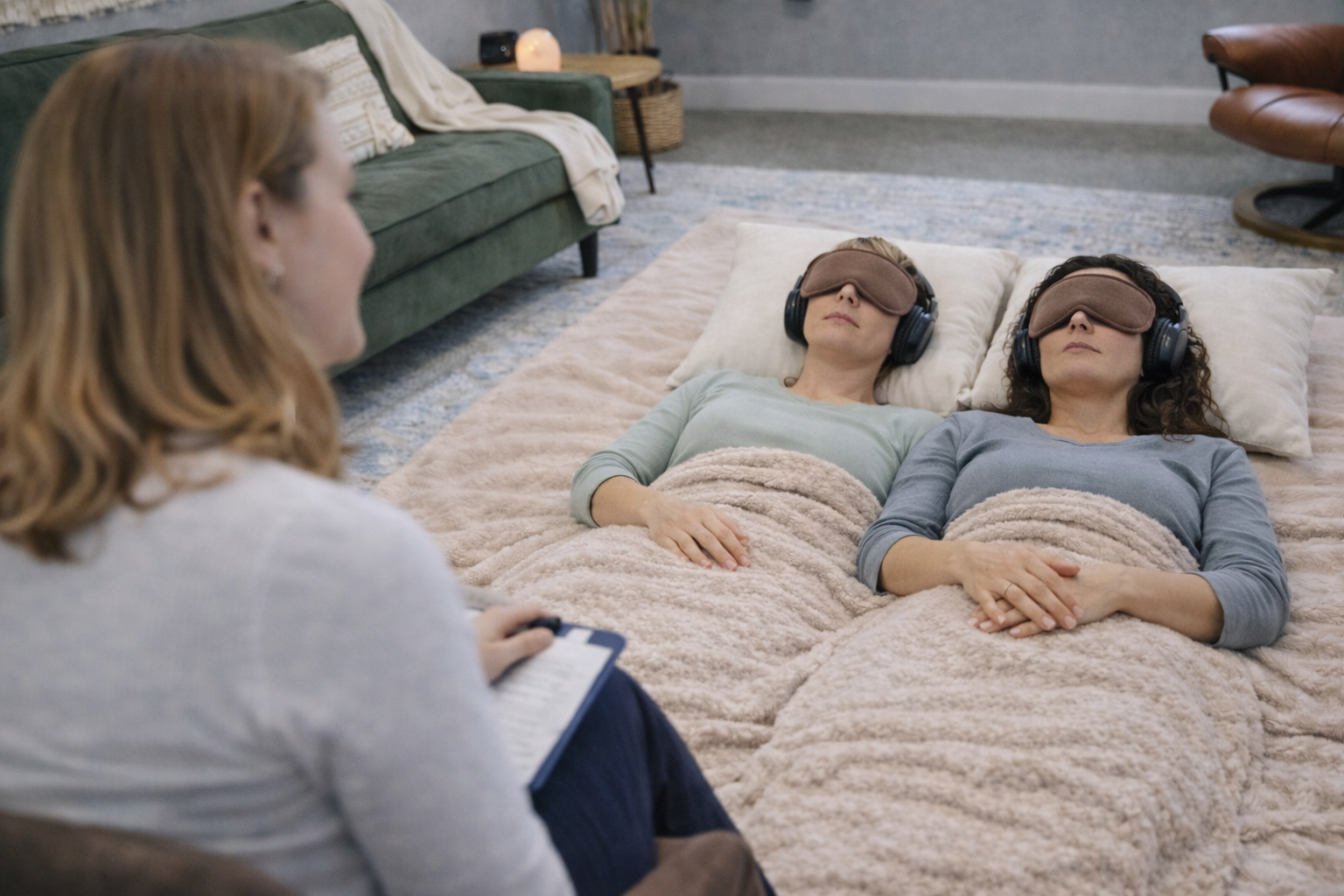
You'll settle into a comfortable space, put on an eye mask and headphones with carefully chosen music, and turn inward. I stay with you the entire time, taking notes, gently keeping you oriented to your intention, and stepping in only if you need grounding or support. Every journey is different. Some people have profound emotional releases. Some have unexpected clarity or imagery. Some feel a deep physical relaxation they haven't felt in years. Some have a quieter experience that still opens something meaningful.
There's no right way for it to go. What matters is what we do with it afterward, the integration, where we make sense of what came up and figure out how to bring it into your actual life.
-
Yes, when it's done properly. And doing it properly means doing it with a trained therapist, not just at a clinic where you get the medicine and go home.
Ketamine has been used safely in medical settings for over 50 years. At the doses used in psychiatric treatment it has an exceptionally strong safety record and is on the World Health Organization's list of essential medicines. Everyone who works with me goes through a thorough medical screening with a collaborating prescriber before we ever get near a session. There are medical and psychiatric conditions that make someone a poor candidate, and we take that seriously.
The therapy piece is not optional. Ketamine on its own can open powerful doors in the mind. But walking through those doors without a trained therapist to help you make sense of what comes up can feel confusing, overwhelming, or even retraumatizing. The medicine and the therapy together is what creates lasting change. One without the other is just an experience.
-
Night and day different. And if you've been on antidepressants for a while you probably already feel the difference in your bones even if you couldn't articulate it.
Traditional psychiatric medications like SSRIs and benzodiazepines work by suppressing or regulating symptoms. They can take weeks to kick in, work maybe 40% of the time, and for a lot of people leave them feeling flat, numb, or like a muted version of themselves. They're also daily medications, often for years, sometimes forever.
Ketamine works up to 70% of the time, often within hours or days, and it does the opposite of numbing. It awakens the brain. It floods the system with glutamate, which is basically the master switch of the brain, and creates a window of enhanced neuroplasticity where new patterns and connections can actually form. It's used as a short term catalyst, not an ongoing daily medication.
A lot of people come to KAP specifically because they're exhausted by the side effects of traditional meds and they want something that helps them feel again, not less. That's a completely legitimate reason to be here.
-
Here's the straightforward breakdown.
Initial Medical Screening with the collaborating prescriber is around $400 for 75 minutes, paid directly to them.
The Preparation Intensive is $3,500 for 6 hours.
The Medicine and Integration Intensive is another $3,500 for 6 hours.
The ketamine medicine itself runs about $40 to $80 per package, shipped directly to your home from a compounding pharmacy, and covers 4 sessions.
Insurance doesn't cover this. That's just the reality.
Here's the other reality: most people who come to me have already spent years in weekly therapy, thousands of dollars, circling the same pain without it actually moving. Two days of intensive work with KAP gets you somewhere that can take years of weekly sessions to reach, if you get there at all. When you do that math it looks very different.
You are worth this investment. The version of yourself on the other side of this work is worth it. And honestly, the people in your life who get to receive that version of you? They're worth it too.
-
The short answer is six. That's the minimum I require, and it's not arbitrary.
Research consistently shows the best results from Ketamine Assisted Psychotherapy happen between six and eight intensives. Not one. Not two. Six to eight. That's where the real transformation takes root, where the brain has enough repeated windows of neuroplasticity to actually rewire, not just crack open for a moment and then snap back to old patterns.
Here's the thing about ketamine that most people don't understand going in. The first session or two are often about orientation. Your nervous system is learning what this experience is, what it feels like to let go, what it means to trust the process. Some people have profound breakthroughs right away. Others need a few sessions before the medicine can really do its job because the defenses are still figuring out that it's safe to soften.
By sessions three and four you're usually going deeper. Old stories are loosening their grip. New connections are forming. The integration work between sessions starts to compound.
By sessions five, six, seven and eight? That's where lasting change lives. That's where the new neural pathways get reinforced enough to actually stick, not just feel good for a week and then fade back into the same old noise.
One or two ketamine sessions without adequate follow through is a bit like starting a renovation and stopping halfway. You've torn open the walls but you haven't rebuilt anything yet. Six sessions is where you actually get to move into the new version of yourself.
So yes, I require a minimum of six intensives. Not because I want to lock you into anything but because I genuinely care about results and the research is clear about what it takes to get them. Anything less and we're leaving the most important work undone.
-
Yes. And depending on where you are and what you need, one of the other approaches might actually be the better place to start.
Here's what I offer:
EFT Retreats for Couples
This is the foundation of almost everything I do. Emotionally Focused Therapy is the most research backed approach for healing emotional distance, breaking negative cycles, and rebuilding real trust between partners. In a two day EFT intensive we slow everything way down, map out the painful dance that keeps pulling you apart, and help you both finally understand what's happening underneath the fighting, the silence, and the distance. A lot of couples who come in looking like exhausted business partners leave holding each other like they mean it again. This is where most couples start.
Brainspotting Retreats for Couples
If you've done talk therapy until you're blue in the face and still can't stop the cycle, Brainspotting is where I'd point you next. It goes beyond talking and works directly with your nervous system, the part of you that reacts before your thinking brain even has a chance to catch up. Using specific eye positions we access emotions that have been locked in the body sometimes for decades and process them at the root. Couples often describe feeling things shift that years of conversation never touched.
Brainspotting Retreats for Individuals
Same powerful approach, just for you solo. Whether your partner isn't ready yet or you simply know the work you need to do is your own, an individual Brainspotting intensive goes deep into the patterns, old wounds, and nervous system responses that are running your life without your permission. When one person genuinely heals, the relationship changes too. The ripple effect is real.
Solo Healing Custom Retreat
This is a fully custom built intensive designed for the individual who is ready to do the inner work now. We pull from whatever combination of Brainspotting, EFT, and Ketamine Assisted Psychotherapy makes the most sense for what you're carrying. It's not one size fits all. It's built around you, your history, your nervous system, and your goals.
The honest truth about all of these?
Most of my work ends up weaving all three modalities together anyway. EFT to understand the emotional cycle, Brainspotting to process what's stored in the body, and KAP when the doors have been locked shut for a long time and we need something that can really open them. Each one does something the others can't. Together they create a depth of transformation that I've never seen talk therapy alone achieve.
Not sure which one is right for you? That's exactly what the free consultation call is for. We figure it out together.
-
Let me give you the real answer, not the sanitized brochure version.
Most people who find their way to Ketamine Assisted Psychotherapy have already tried the other stuff. The weekly therapy. The medications. The self help books. The meditation apps. The journaling. And some of it helped, a little, for a while. But something fundamental never shifted. The anxiety came back. The depression settled back in. The same patterns kept running. The same walls kept going up inside you.
That's not a personal failure. That's biology. When pain, trauma, or years of emotional survival have literally rewired your nervous system, talking about it only goes so far. You need something that works at the level where the wiring actually is.
That's what ketamine does.
Here is what the research shows and what I have watched happen in my office over and over again:
It works when nothing else has. Expected response rates for treatment resistant depression sit between 60 and 75 percent. Compare that to antidepressants at around 40 percent, which also take weeks to kick in and come loaded with side effects. Ketamine often works within hours or days. For people who have been suffering for years that is not a small thing. That is life changing.
It quiets the noise. Ketamine temporarily disrupts the brain's default mode network, the part responsible for those relentless repetitive thought loops. The inner critic that never shuts up. The spiral that starts at 2am and doesn't stop. The rumination about everything you said wrong and everything that might go wrong. When that quiets down even temporarily people often describe feeling a kind of mental silence they haven't experienced in years. Some for the first time ever.
It calms the fear response. The amygdala, your brain's threat detector, gets hyperactive when you've lived through chronic stress, anxiety, or trauma. It starts firing at things that aren't actually dangerous because it has been in survival mode for so long. Ketamine dials that down. Suddenly situations that felt threatening feel manageable. Emotions that felt unbearable feel processable. Your body stops bracing for impact every single day.
It opens a genuine window for change. This is the part that makes KAP different from just taking ketamine at a clinic and going home. The medicine creates 36 to 72 hours of enhanced neuroplasticity, meaning your brain is literally more capable of forming new patterns and connections during that window. When you are in that window and working with a skilled therapist, you can do in hours what traditional therapy takes years to accomplish. New neural pathways actually form. New ways of experiencing yourself become possible. That is not a metaphor. That is neuroscience.
It softens the defenses. The walls you built to protect yourself also keep you stuck, isolated, and cut off from your own inner life. Ketamine dissolves the rigid defenses, the protections you constructed because you had to, that now prevent you from being honest, vulnerable, or present even with yourself. When those walls come down in a safe guided setting people say things and feel things they have been holding for decades. And releasing that changes everything.
It helps you feel again. This one is for the people who have been on traditional psychiatric medication for years and can't remember the last time they felt something real. Not the medicated flatness. Not the going through the motions version of your own life. Actually feeling joy, grief, aliveness, presence. Ketamine does the opposite of numbing. It awakens. People describe feeling more like themselves than they have in years. Sometimes ever.
It supports healing across a wide range of conditions. Depression, anxiety, PTSD, OCD, eating disorders, addiction recovery, chronic pain, ADHD, the aftermath of divorce or betrayal, the grief of feeling completely lost in your own life. KAP has shown meaningful results across all of it. Not because it is a magic fix but because all of those conditions have roots in the nervous system and the brain's learned patterns of survival. And that is exactly where ketamine works.
It gives you your life back. Not a coping strategy. Not a way to white knuckle through another week. An actual felt experience of what it is like to be inside your own body without dread, without the constant hum of anxiety, without the weight of patterns you have been trying to outrun for years. People walk out of this work describing a lightness they forgot was possible. A sense of hope that isn't wishful thinking but something they can actually feel in their chest.
Six to eight sessions is where the research shows the best and most lasting results. Not one or two. Six to eight. That is where the rewiring actually sticks. That is where you stop having moments of relief and start living differently.
This is not a shortcut. It is a different road entirely. And for a lot of people it is the one that finally leads somewhere.
-
Ketamine is incredibly powerful, but it's not for everyone. There are some medical conditions that make ketamine unsafe, full stop. These include uncontrolled high blood pressure, significant heart disease, a history of aneurysm or stroke, pregnancy or breastfeeding, severe liver disease, untreated thyroid disease, acute angle closure glaucoma, and severe or recurring bladder issues like cystitis.
On the psychiatric side, ketamine is not a fit if you're living with schizophrenia, active psychosis, recent mania or hypomania, or a severe substance use disorder.
And yes, we'll do a thorough medication review before anything else, because certain meds and substances don't play nicely with ketamine, and your safety is non-negotiable.
Here's the honest truth: if any of this applies to you, it doesn't mean you're out of options. It just means this particular path isn't the right one for you right now. There may be other ways I can support you, and I'm happy to talk through that on a consult call.
-
Yes, and this is one of the areas where I've seen it make the biggest difference.
Traditional antidepressants (Zoloft, Prozac, Effexor, you know the list) work for some people. But a lot of the couples and individuals I work with have been on them for years, feel emotionally flat, and are still struggling. That's not a personal failure. It's just that those medications weren't designed to get to the root of things.
Ketamine works differently. Instead of numbing the nervous system, it actually wakes the brain up. It floods the brain with glutamate, which is basically the master switch for mood, memory, and learning, and creates a window of enhanced neuroplasticity. In plain English: your brain becomes temporarily more flexible and open to change.
Research shows ketamine works for depression up to 70% of the time, often within hours or days, compared to 40% with traditional antidepressants that can take weeks to kick in (if they work at all).
But here's what I want you to understand: ketamine alone isn't the whole answer. A medicine session without therapy is like getting a gym membership and never showing up. The real shift happens when the ketamine opens the door and we do the work together to walk through it- processing what comes up, integrating the insights, and building new patterns that actually stick.
If you've tried medication after medication and still feel stuck, hopeless, or like you're just going through the motions, this might be worth exploring.
-
People come to ketamine therapy for a lot of different reasons, but the common thread is usually this: they've tried other things and still feel stuck.
Some of the most common reasons include:
Depression that hasn't responded to traditional medication
Anxiety that won't quit, no matter what you try
PTSD and trauma that talk therapy alone hasn't been able to touch
Feeling emotionally numb or disconnected, from yourself, your partner, your life
Wanting to break out of the same painful thought loops and relationship patterns
Being done with daily medications and their side effects
If you're exhausted from trying to feel better and not getting there, ketamine therapy might be the reset your nervous system has been waiting for.
-
Nope. People fly and drive in from all over to do this work. When you're ready for something this deep, a little travel is the least of your concerns.
What I do need is for you to be physically present in North Carolina for our sessions. But where you're coming from? Doesn't matter.
If you're traveling in, I'd recommend building in an extra day before and after your intensive, not just for logistics, but because rushing in and out of this kind of work doesn't do you any favors. Give yourself time to arrive, settle in, and integrate before heading back to real life.
-
Every experience is different. But here's what most people report:
During the session you may feel a sense of floating or detachment from your body, a dissolving of your usual mental chatter, visual imagery or colors, deep emotional releases, and a softening of the defenses you didn't even realize you were carrying. Time will feel different, sometimes it stretches, sometimes it collapses.
Some people have profound, almost spiritual experiences. Others have something quieter and more subtle. Both are valid. Both are useful.
After the medicine wears off, usually within 2 to 3 hours, most people feel lighter, softer, and more open. Sometimes emotional. Sometimes euphoric. Sometimes just... still. That stillness alone can feel like a revelation if you've been running on anxiety and tension for years.
What I want you to know is this: whatever you experience is exactly what you're supposed to experience. There's no wrong way for this to go. My job is to make sure you feel safe enough to let it.
-
Ketamine has a relatively short half-life, about 2 to 3 hours. That means the main effects of the medicine typically wear off within that window, which is why a ketamine session usually runs around 1.5 to 3 hours of active experience.
But here's what that doesn't mean: just because the medicine leaves your system quickly doesn't mean the work is over. The neuroplasticity window, that period where your brain is more open, flexible, and receptive to change, lasts anywhere from 36 to 72 hours after a session. That's the integration sweet spot, and it's exactly why I push couples and individuals to take the day after their intensive off if at all possible.
The medicine moves through fast. The shift it creates? That can last a lot longer.
-
In a clinical setting, the ketamine drug is used at sub-anesthetic doses, meaning just enough to create an altered state of consciousness, not put you under. In my practice, I offer sublingual (dissolved under the tongue) administration. During a session, you'll lie down with eyeshades and headphones while the medicine does its work. I'm with you the entire time, holding the space, keeping you safe, and guiding the experience.
The key difference between ketamine in therapy versus a ketamine clinic? The therapy part. The medicine opens the door. I help you walk through it.
-
The closest airport is Raleigh-Durham International Airport (RDU), about 20 minutes from my office in Wake Forest. It's a major hub with direct flights from most cities, so getting here is usually pretty straightforward.
Once you land, you can grab a rental car, Uber, or Lyft straight to the office. Just keep in mind, you will need a ride back after your session. You cannot drive for the rest of the day following ketamine treatment, so plan that part ahead of time.
-
All sessions are held in my private office in Wake Forest, NC, just outside of Raleigh. The space is intentionally calm, cozy, and nothing like a clinical medical setting. Think weighted blankets, carefully curated music, and eyeshades, not fluorescent lights and a paper gown.
You'll have everything you need to feel safe, comfortable, and held throughout the entire experience.
If you're traveling from out of state, Wake Forest is an easy drive from Raleigh-Durham International Airport, with plenty of hotels nearby.
Address: 201 Wait Ave, Wake Forest, NC 27587
-
Short answer: it's not like anything you've probably experienced before, and "high" isn't really the right word for it.
Ketamine creates an altered state of consciousness. You may feel detached from your body, experience vivid imagery, or feel a deep sense of calm and expansiveness. Some people describe it as dreamlike. Others say it feels almost spiritual. It's not the kind of "high" you'd associate with recreational drug, it's less about euphoria and more about a profound shift in perception.
And that shift is exactly the point. When your brain temporarily steps out of its usual patterns and defenses, it becomes open to change in a way that everyday life, and even traditional therapy, rarely allows.
So is it psychoactive? Yes. Is it a party drug experience? No. This is medicine, used intentionally, in a safe and supported therapeutic setting. There's a big difference between getting high on a Saturday night and sitting with a trained therapist doing some of the deepest emotional work of your life.
-
Book the free 30 minute consultation call. That's the whole first step.
No paperwork, no commitment, no having to show up polished and articulate about exactly what's wrong. Just a real conversation where you tell me what's going on and we figure out together whether this is the right fit and the right time.
I work with a very small number of clients at a time because I refuse to be the kind of therapist who's stretched so thin they can't actually show up for the people they're working with. That means spots are genuinely limited. If you've been sitting with this page for a while and something in you keeps coming back to it, that's worth paying attention to.
The call is free. The conversation is real. And if it's the right fit, we take it from there.
Why Traditional Hour-by-Hour Sessions Just Don't Cut It Anymore
Look, you've been to therapy before. Maybe multiple times. And you're not a therapy skeptic, it's genuinely helped in some ways. But this time around, you're craving something different. Something that goes deeper and actually sticks.
You're not interested in another worksheet on "coping strategies" or breathing exercises you found on Instagram three years ago. Hell, and it’s better be better than what Dr. ChatGPT can come with at 2 am. You want an approach that helps you actually change and sustain that change, not just survive another week.
That's why I stopped doing the traditional weekly grind. Here's what that usually looks like: You show up. Spend the first chunk catching me up on your week. ("So Tuesday was rough, then my boss said this thing...") Then we dig in for—what, twenty minutes?—before we have to start wrapping up because the clock is ticking and someone else is in the waiting room. You leave feeling like you just started to get somewhere... and then you wait seven days to try again.
Rinse. Repeat. Forever.
Real breakthroughs? Rare. Because you can't build momentum when you're constantly stopping and starting like a jerky YouTube video buffering on slow WiFi.
Full Day Retreats Fill The Gap That Weekly Therapy Couldn’t
In a six-hour session, we're not watching the clock. We're not rushing. We can stay with the hard, uncomfortable stuff long enough to actually understand what's driving your patterns AND shift them in real time, right there in the room.
One full day retreat often delivers what would take months of weekly sessions. Because instead of talking about your anxiety, your relationship struggles, or your stuck places on repeat, you actually process them. You leave with clarity, relief, and a sense that real change is actually possible.
“It was my first time experiencing ketamine assisted psychotherapy (KAP) and I was nervous. I was also eager to shift some thought dynamics I was stuck in, but mostly nervous. Irina’s calm grounded energy, good humor and confidence from the get-go helped me not only relax into the process, but have an amazing experience! Because I knew she was there, in charge and fully with me, I could let go and be open. Her insights, presence and laughter as we integrated my experience will mark this as one of the best experiences of my life. I can’t recommend her highly enough. Especially if you are new to this modality!”
How the Ketamine Therapy North Carolina Intensive Format Works
Most therapy feels like trying to build a house five minutes at a time. You show up, lay a brick, talk about your week, and just when you're getting somewhere…time's up. See you next week. Start over. Full day retreats work differently. We go all in. One full day. Six hours. No clock-watching. No "we'll pick this up next week." We stay with what's hard until you actually move through it—not just talk about it.
Morning: We Get Clear
We start by understanding what's really going on, what's driving your anxiety, your stuck patterns, your pain. We map it out together so we know exactly where we're heading.
Midday: We Go Deep
This is where the real work happens. We don't stop when it gets uncomfortable, that's when breakthroughs happen. Whether we're using Brainspotting, Ketamine, or EFT, we stay with it until something shifts.
Afternoon: We Integrate
We don't just leave you hanging with big emotions and no container. We process what came up, make sense of it together, and give you tools to carry this forward into your real life. You leave different than you came. Not just with insights. With an actual corrective emotional experience of feeling unstuck. Of breathing easier. Of knowing what to do next.
One intensive retreat = 10+ weeks of traditional therapy. Because we're not starting from scratch every seven days. We're building momentum in real time.
What people are saying on Google about Counseling Raleigh NC with Irina
-
“We've just completed a full day EFT intensive with Irina, and are shocked how much we didn't know about how each of us was really feeling on the inside (we have been together for a very long time). This technique is simply amazing and I am actually excited to continue working on my relationship for the very first time ever. Just do it.”
-
“Irina is such a joy to speak with. She has a warm and compassionate demeanor and is incredibly thoughtful, while also always being honest and asking you to do the same. She has so much knowledge on multiple therapeutical modalities and theories. I always love picking her brain and hearing what insights she has on different topics. She also consistently works to continue her own education and learn new ways to enhance her practice. I wish everyone could have someone like Irina in their corner.”
-
“There are no words to adequately describe the incredible therapy I received from Irina. She is truly one of a kind. While struggling with divorce and all the feelings and emotions that entails, therapy with Irina was truly a Blessing for me. She is so insightful and knowledgeable in so many ways. My time in therapy with her changed my life!!!”
-
Irina has been an absolute blessing in our lives. With her compassionate approach, she has not only helped to save our marriage but also guided us towards a future filled with love, understanding, and anticipation. We are now proud parents-to-be, expecting twins, and we owe a great portion of our unity to Irina's expertise.
From our very first session, Irina made it a priority to ensure that both my husband and I felt heard and understood. Her genuine nature and empathetic demeanor created a safe space for us to express our deepest fears, frustrations, and desires. Irina's ability to connect with us on an emotional level fostered a sense of trust that was vital for the healing process.
One of the most remarkable aspects of Irina's approach is her authenticity. She never hesitated to challenge us when necessary, encouraging us to confront uncomfortable truths and address unresolved issues. Her guidance extended beyond mere words, as she provided practical recommendations for activities and work that would help us rebuild our connection. We followed her suggestions, and even months later, we continue to reap the benefits.
What truly sets Irina apart is her genuine passion for counseling. It is evident that she isn't driven by financial gain but rather by a sincere desire to help couples find happiness and harmony. Irina consistently demonstrated that she had our best interests at heart, and she never hesitated to let us know when she believed we were ready to graduate from therapy or when she felt we needed more work. This level of transparency and honesty allowed us to trust her deeply.
If you find yourself in need of a marriage therapist who leads with compassion, authenticity, and true dedication to her craft, we wholeheartedly recommend Irina. She has the power to transform relationships and bring joy and fulfillment back into your life. Trust in her expertise, and you will find yourself on a path towards a brighter, happier future.
-
“I'm so beyond thankful I found Irina during a critical time in my life. I needed someone to help me find solutions. She never imposed her own opinions or values on me and from the first phone call she made me feel heard and understood. Her advice to me has made a lasting impact and for that I'm so grateful. I do believe she genuinely cares.”
-
Irina is a caring, compassionate therapist who is passionately committed to helping couples increase intimacy, , connection, and healing. With kindness, professionalism, and a refreshing balance of directness and humor, she works intentionally to create safety for tackling some of the real sticky issues that arise in relationship. I never hesitate to refer couples who are looking to deepen their relationship to Irina because i trust they will be in great hands.
Not Ready for Ketamine Therapy North Carolina Yet?
Browse these blog posts for relationship tips to optimize your life and marriage:


“Irena is incredibly talented! I initially saw her to address one specific issue, but our work together uncovered a few deeper things from my past that had been quietly holding me back in the present. With her guidance, I was able to heal old trauma and finally break free. The transformation happened in record time, and I truly feel like a new person. She is worth every cent of the investment, and the peace and freedom I feel now are absolutely priceless. I cannot recommend her enough!”